Project Overview
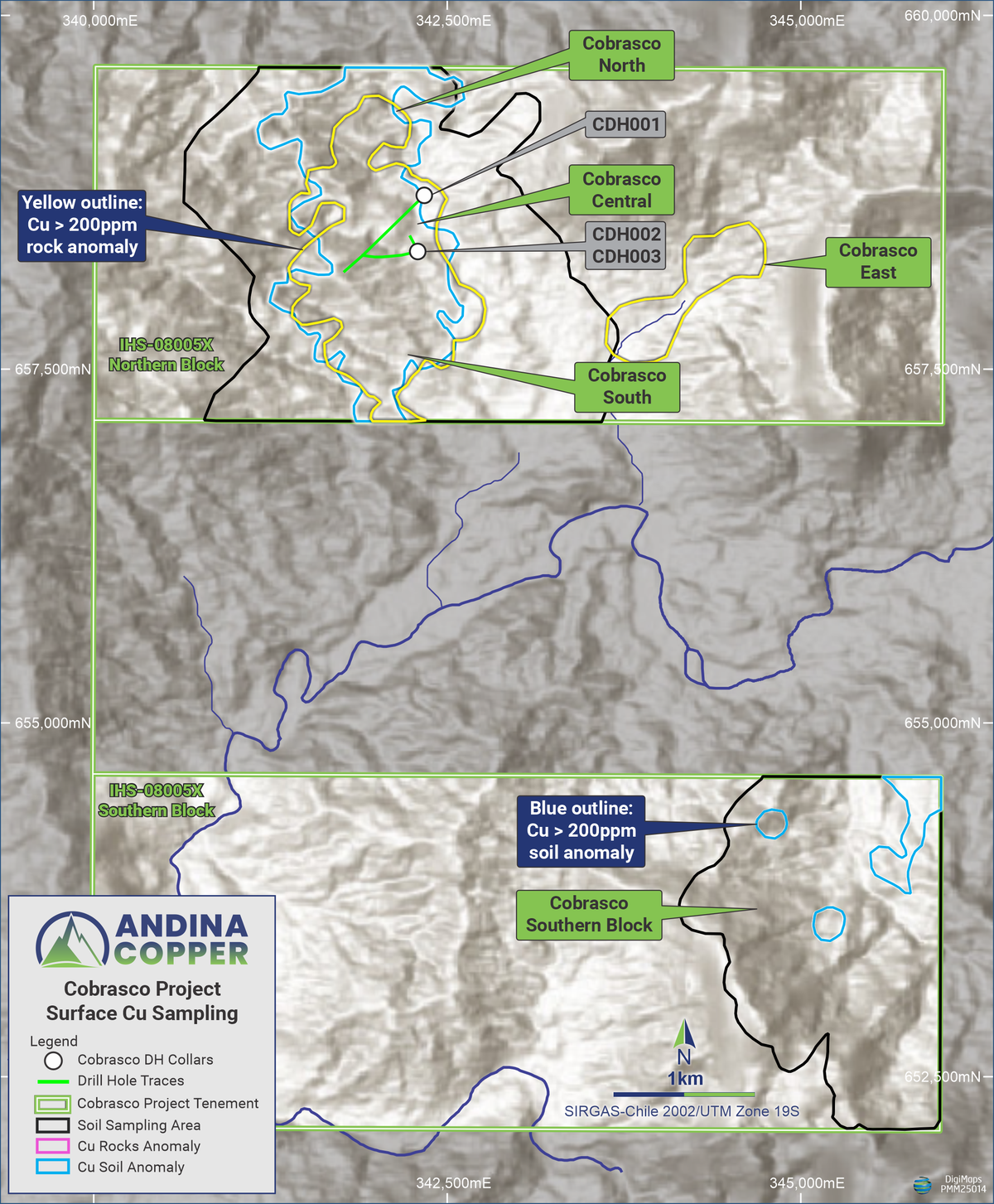
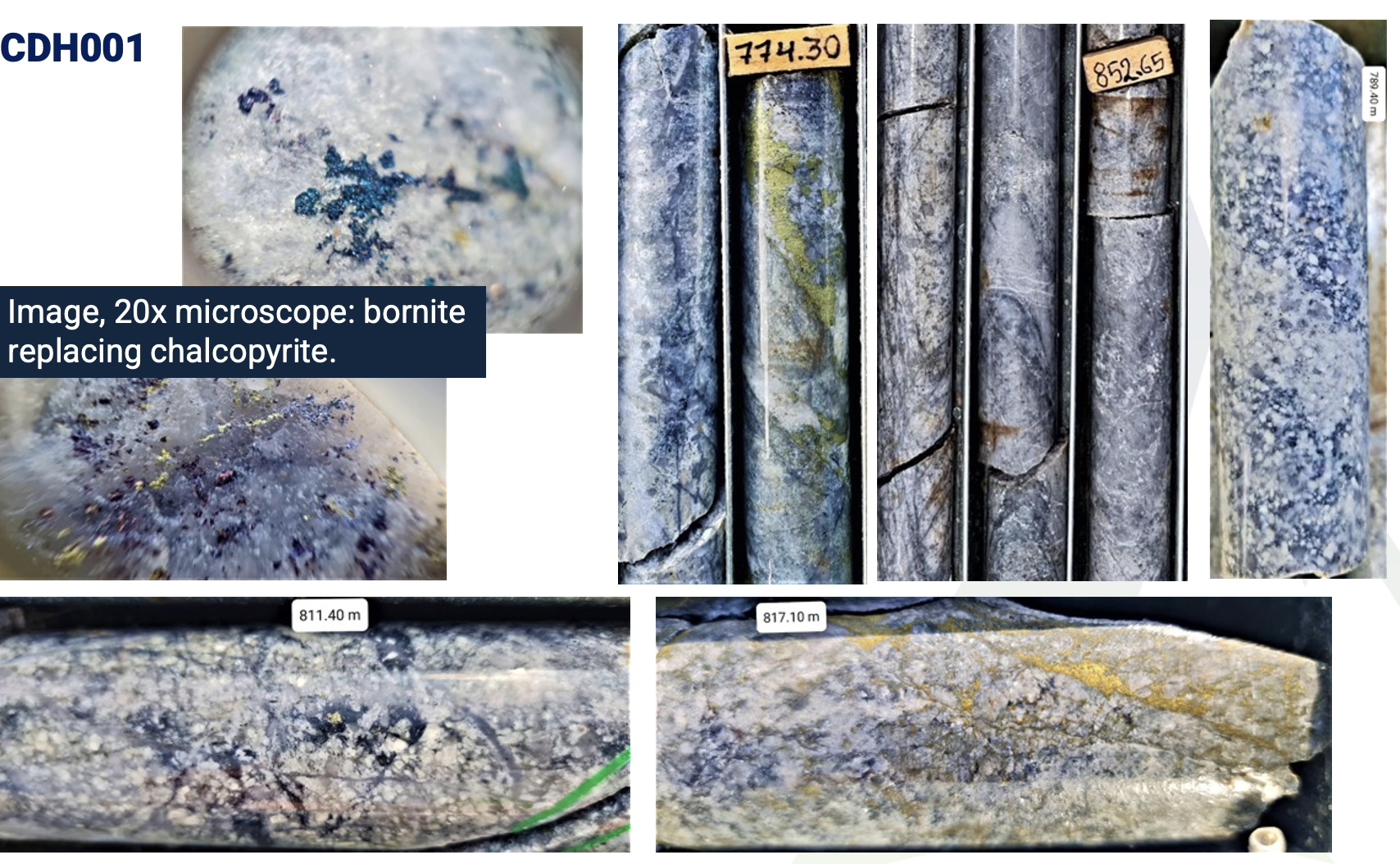
The Cobrasco Project in Colombia’s Chocó Copper Belt is a significant new copper-molybdenum porphyry discovery by Rugby Resources. The first drill hole returned up to 808m at 0.42% Cu with high-grade bornite mineralization. The project covers a 3 km² geochemical anomaly and remains open in all directions.
Situated within a major Andean porphyry gap – between some of South America’s largest copper districts – Cobrasco stands out as one of the few untested, district-scale porphyry systems in the region.
With logistics, permits, and community support already in place, Cobrasco is fully drill-ready and holds strong potential for expansion.

Outstanding Cu-Mo mineralization
intercepted from drilling.

Multiple compelling, untested
porphyry targets across the property.

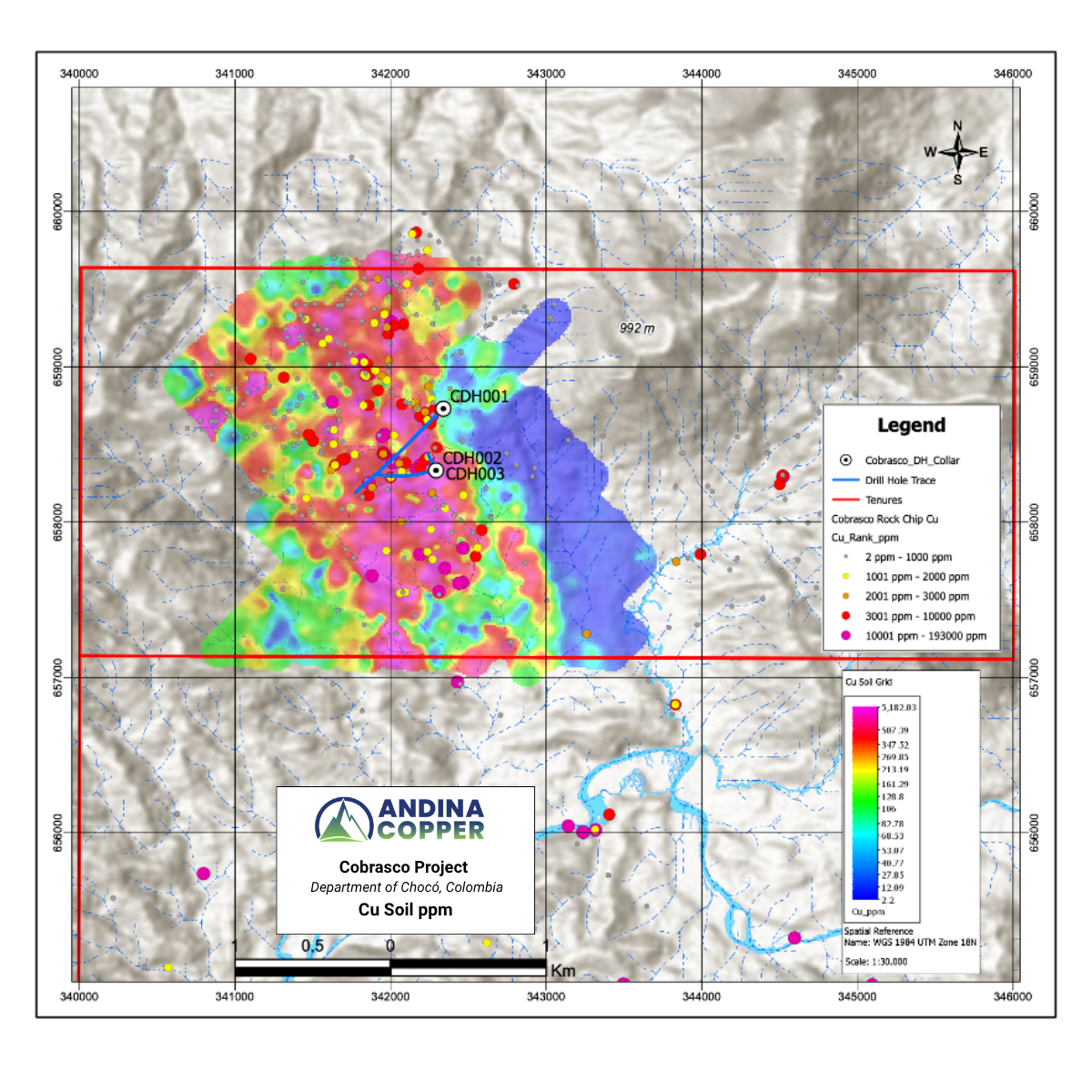
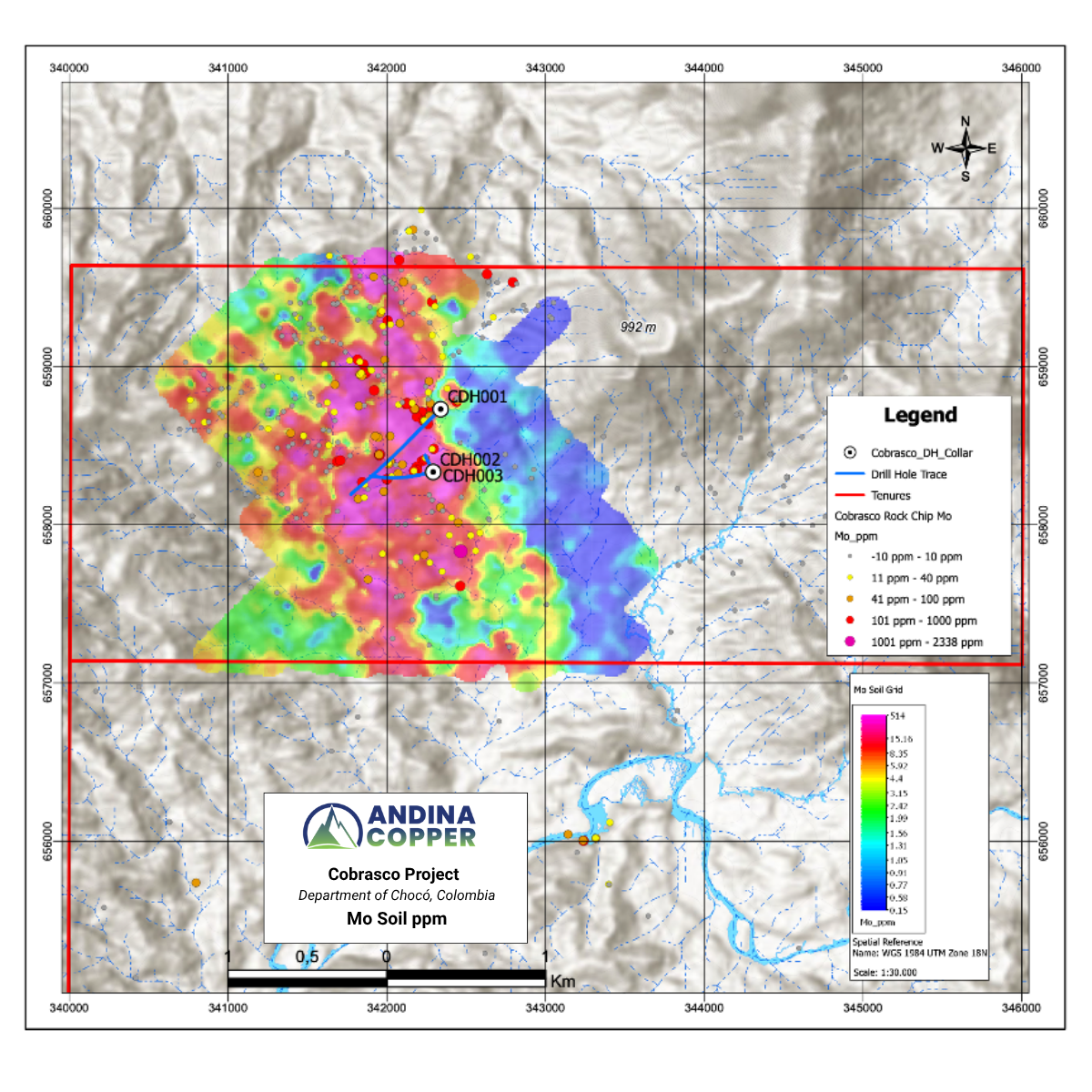
3 km² Cu-Mo soil anomaly
coincident with drill intercepts.
Drilling to date
Outstanding drill intercepts from first three holes: porphyry Cu–Mo mineralization commencing near surface and extending to depth.
CDH001:
- 808 m @ 0.42% Cu, 79 ppm Mo (from 184 m to 992 m).
- Including 138 m @ 0.77% Cu, 164 ppm Mo.
- High-grade: 82 m @ 0.90% Cu, 199 ppm Mo.
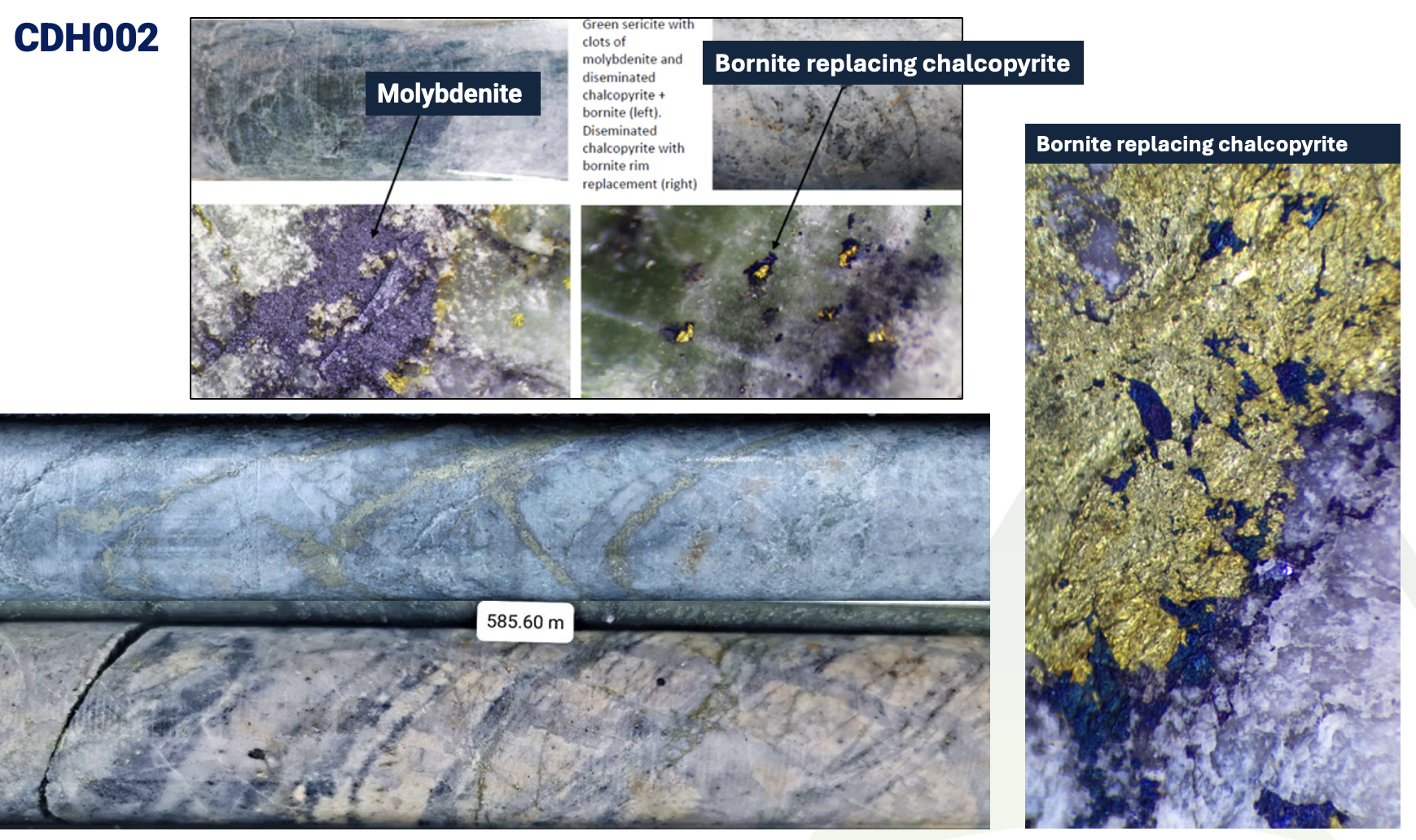
CDH002:
- 70 m @ 0.29% Cu, 50 ppm Mo (near surface).
- 754 m @ 0.46% Cu, 76 ppm Mo (from 152 m to 906 m).
- High-grade: 172 m @ 0.74% Cu, 78 ppm Mo.
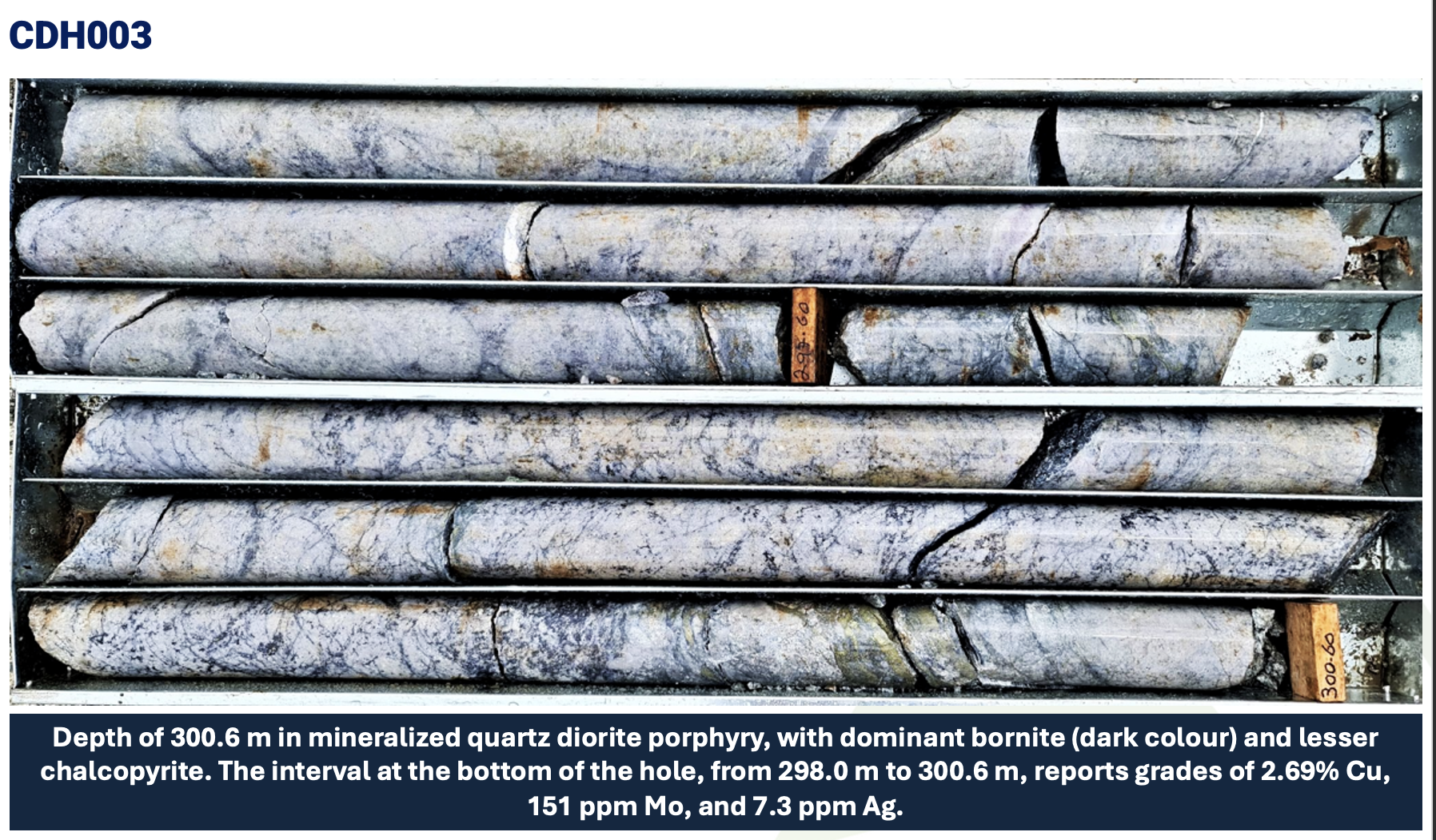
CDH003 (drilling paused at 300.6 m):
- 60 m @ 0.27% Cu, 57 ppm Mo (from 8 m to 80 m).
- 144.6 m @ 0.69% Cu, 155 ppm Mo (from 156 m to 300.6 m).
- High-grade: 100.6 m @ 0.72% Cu, 210 ppm Mo.
Geochemistry and Geophysics
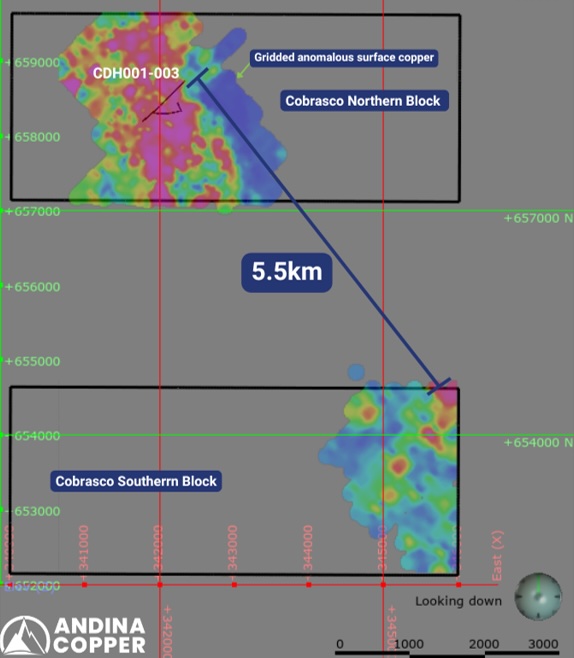
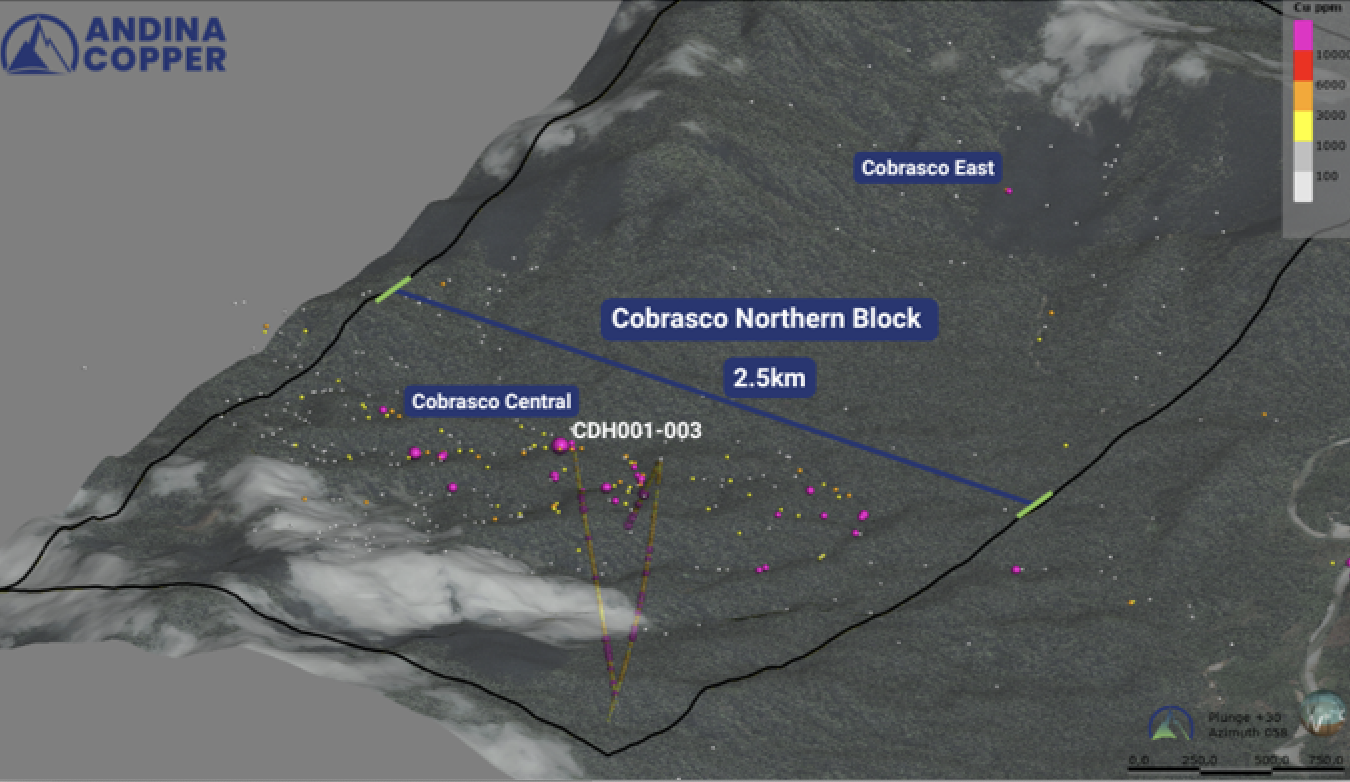
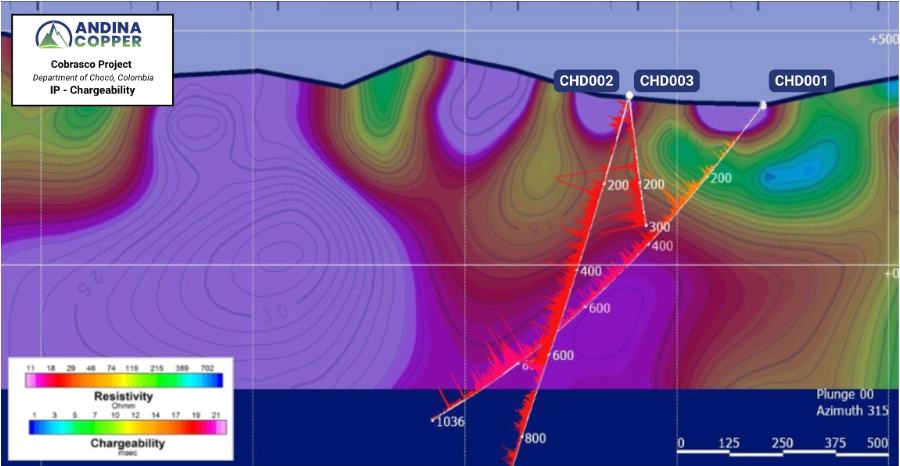
Integrated IP geophysics and surface geochemistry define a large porphyry Cu—Mo system at Cobrasco.
Strong spatial correlation between drilling results, IP chargeability, and geochemical anomalies.
IP sections show a vertically extensive chargeability anomaly, open at depth and laterally.
Emerging Porphyry Copper District with District-Scale Potential
-
Initial discovery at Cobrasco North open in all directions.
-
Only 3 drill holes completed on a +3km2 anomaly
-
Pathfinder geochemistry indicates the presence of multiple porphyry centres along and beyond key geological contacts.
-
Potential for preserved, unexposed (“blind”) porphyry systems.